
How Can Closures for Plastic Canisters Reduce Leakage and Product Loss?
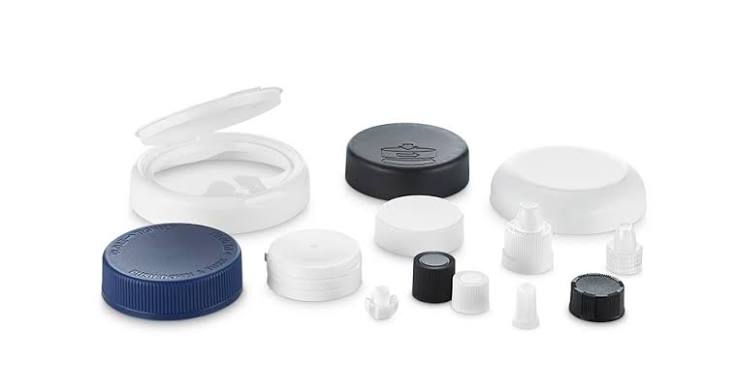
A Quality-Control Guide for Sealing, Distribution and Repeated Use
Reliable containment depends on more than the container body. Closures for Plastic Canisters control how the neck is sealed, how the package is first opened and how its contents are dispensed. A correctly selected cap can limit leakage and contamination, while an unsuitable one may fail even when it appears tight.
Selection should consider the contents, canister neck, sealing material, capping process, storage environment and distribution conditions.
Where Do Closure Failures Usually Begin?
Many problems develop at the contact point between the cap, liner and canister neck. Small differences in components or application can create a path for liquid or vapour.
Common causes include:
- Incorrect neck or thread format
- Cross-threading
- A missing or damaged liner
- Residue on the sealing surface
- Incorrect tightening force
- Chemical attack on the cap or gasket
- Internal pressure
- Impact or vibration
- Reuse of a worn closure
- Neck distortion
Leakage may appear immediately, after temperature changes or when the package is stored on its side. Quality checks must assess more than its initial appearance.
How Does the Canister Neck Affect Performance?
A closure must match the complete neck design, not just its approximate diameter. Canister ranges can include formats such as RD45, RD51 and RD61. Thread profile, neck height and sealing-land dimensions still require confirmation.
The chosen cap should be trialled with the actual container. Suitable compatible container bodies can be assessed for thread engagement, liner compression and handling performance.
Confirm that:
- The cap starts without force
- The closure sits level
- The tamper ring engages
- The liner contacts the neck evenly
- The cap does not bottom out before sealing
- The neck remains undamaged
A cap that feels tight may be cross-threaded rather than sealed.
Why Is the Liner Material Important?
A liner or sealing ring forms a barrier between the closure and the neck. The system may use a foam liner, flexible ring, sealing disc or moulded internal cone.
Compatibility must cover every component that can contact the contents. A PP or HDPE cap may remain stable while its liner absorbs liquid, swells or loses resilience. This can reduce sealing pressure.
Trials should check for:
- Swelling or curling
- Changes in hardness
- Product absorption
- Loss of elasticity
- Closure loosening
- Contamination or discolouration
Testing should reflect the planned concentration, temperature and storage period. Water-only checks may not represent the intended formulation.
How Can Application Torque Be Controlled?
Application torque is the force used to tighten a screw closure. Too little may not compress the seal sufficiently. Excessive force can damage the thread, deform the cap or make opening difficult.
A capping procedure should define:
- Target torque and tolerance
- Application equipment
- Sampling frequency
- Removal-torque checks
- Rejection criteria
Plastic and foam components can relax after capping. Removal torque and leakage should therefore be checked after conditioning, not only at the filling line. For larger operations, calibrated tools and documented inspections improve consistency.
What Is the Role of Tamper Evidence?
Tamper-evident features indicate whether a package has been opened. A breakable ring normally remains beneath the neck feature when the cap is removed for the first time.
Available tamper-indicating designs can support warehouse inspections and batch control. Test them on the intended canister because an incorrectly positioned ring may break during application or fail during opening.
Tamper evidence does not establish child resistance, leak resistance or transport approval. These functions require separate confirmation.
When Should a Dispensing Closure Be Used?
Removing a cap whenever liquid is required can expose the contents and increase spill risk. A correctly fitted tap enables controlled dispensing while the canister remains stable.
Relevant controlled dispensing fittings should be compared by thread, seal material, flow rate, viscosity suitability and orientation.
Consider:
- Air entry during emptying
- Dripping after use
- Tap access
- Wetted-part resistance
- Cleaning requirements
- Residual liquid
Where a tap cannot provide the required control, alternative liquid-transfer equipment may be considered after checking adapters, materials and operating risks.
How Should Closures Be Tested Before Distribution?
Validation should reproduce the conditions a filled package is expected to experience. Useful checks may include:
- Upright and inverted leakage tests
- Temperature conditioning
- Vibration assessment
- Drop testing where appropriate
- Torque measurement
- Tamper-ring inspection
- Pressure testing
- Storage-duration trials
- Examination after transport
Testing should use production components and the normal capping method. Changing the liner, supplier or application torque can alter performance.
For UN-qualified packaging, the approved closure and documented torque must be used. A replacement that fits the same thread does not automatically retain the package approval.
Can Closures Be Reused Safely?
Reuse depends on the closure design, previous contents and cleaning process. Tamper-evident caps lose their original security function after opening, while liners may remain permanently compressed.
Before approved reuse, inspect for thread wear, cracks, distortion, residue, liner hardening and uneven application. A new compatible closure may provide better control for regulated, hazardous or contamination-sensitive contents.
What Should Buyers Confirm Before Ordering?
A closure specification should identify:
- Exact canister and neck format
- Cap, liner and ring materials
- Required sealing method
- Tamper-evident or degassing function
- Dispensing connection
- Application torque
- Chemical compatibility
- Storage and transport conditions
- UN documentation where applicable
- Quantity and traceability
Turning Closure Selection into Reliable Containment
A dependable seal is created by the relationship between the canister, cap, liner and capping process. Chemical compatibility, torque control, tamper performance and realistic testing determine whether it remains effective.
Treating closure selection as a quality-control process can reduce leakage, wasted product and handling problems while supporting safer storage and distribution.