
How Does the Bahco Adjustable Spanner Improve Maintenance?
What Problem Is the NSB001-300 Designed to Solve?
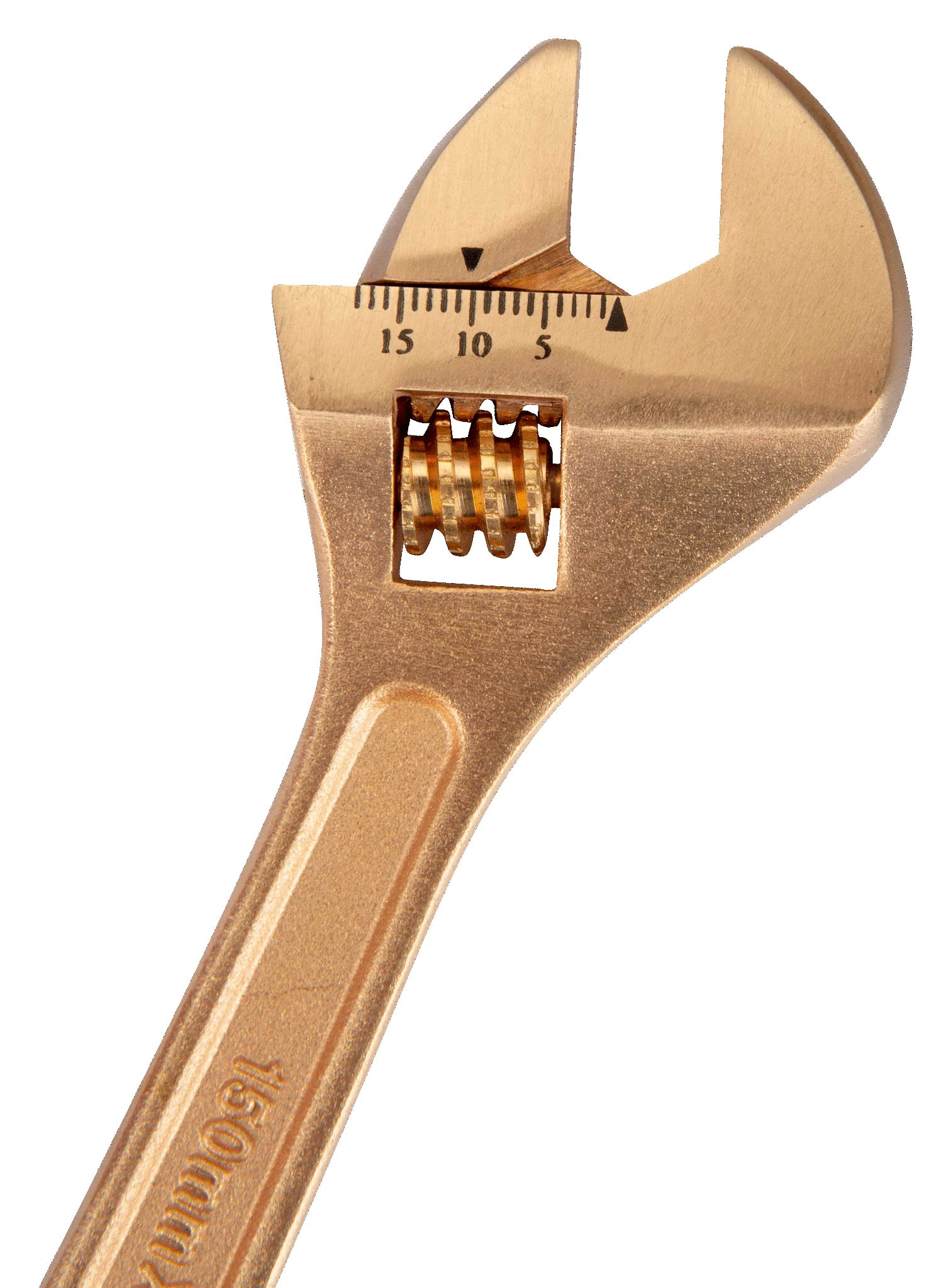
The Bahco Adjustable Spanner is designed for fastening work where versatility, corrosion resistance and reduced spark risk are important. Manufacturer part number NSB001-300 features a 300 mm metal handle, an adjustable central nut mechanism and a maximum jaw opening of 36 mm.
Its copper beryllium construction distinguishes it from an ordinary steel adjustable wrench. The material provides non-sparking and anti-magnetic properties, making the tool relevant to controlled industrial locations where standard ferrous tools may create additional hazards.
Why Is an Adjustable Spanner Useful?
An adjustable spanner allows one tool to engage several compatible fastener sizes. The movable jaw travels along the head as the central adjustment nut is rotated, enabling the opening to match the width of the selected nut, bolt head or fitting.
This versatility can be valuable during inspection and repair work when the technician may not know every fastener size in advance. Other Spanners provide fixed, ring, ratcheting or combination profiles for applications requiring a dedicated size or different access method.
An adjustable design is convenient, but it must be set carefully. The jaws should fit closely against the fastener flats before force is applied.
What Does a 36 mm Jaw Capacity Mean?
The 36 mm capacity refers to the maximum distance between the jaws when fully opened. It allows the NSB001-300 to work with various fastener heads and fittings whose width across flats falls within this limit.
The fastener should be measured across its parallel flat surfaces rather than across opposite corners. Products such as Hex Bolts are manufactured in different metric and imperial sizes, thread standards, materials and strength grades. The correct spanner fit depends on the head dimensions rather than the thread diameter alone.
A poorly matched jaw can damage the fastener corners and reduce the amount of force that can be applied safely.
Why Is Copper Beryllium Used?
Copper beryllium combines useful mechanical strength with resistance to corrosion and magnetic interference. Its non-sparking characteristics make it suitable for selected workplaces containing flammable gases, vapours, liquids or combustible dust.
The tool may be considered for oil and gas facilities, chemical plants, marine maintenance, mining operations, paint manufacturing and other carefully controlled environments. Suitability must always be confirmed through the site’s hazardous-area assessment and the manufacturer’s material guidance.
Non-sparking does not mean completely spark-free. The working surface, surrounding atmosphere and manner in which the tool is used can all influence ignition risk.
How Does the 300 mm Handle Affect Performance?
A 300 mm handle gives the operator useful leverage for turning compatible fasteners. A longer distance between the jaw and the operator’s hand can increase the turning effect produced by a given amount of force.
This leverage must be controlled. Applying more force than the fastener, fitting or tool can withstand may stretch threads, distort components or cause the jaws to slip. Extension pipes should not be placed over the handle unless that method is specifically authorised by the manufacturer.
The NSB001-300 is not a calibrated tightening instrument. Where a specified torque value must be achieved, the final tightening stage requires an appropriate calibrated tool.
How Should the Spanner Be Applied to a Fastener?
The jaw faces should sit fully on the fastener flats. Contact only at the corners concentrates pressure over a small area and increases the chance of rounding the head.
Once the opening has been adjusted, the operator should check for unnecessary jaw movement. Force should normally be directed so that the fixed jaw carries the greater load. Pulling the handle can offer better control than pushing, provided the operator has stable footing and sufficient clearance.
The spanner should never be struck with a hammer. Sudden impact may damage the adjustment mechanism, fastener or surrounding equipment.
How Can the Workpiece Be Stabilised?
Loose or detached components should be supported before fastening work begins. Suitable Vices can hold compatible workpieces steady during workshop maintenance, reducing unwanted movement while the operator adjusts or removes a fastener.
Vice jaws must not crush, mark or deform the component. Soft jaw covers or another approved protective method may be required for sensitive surfaces.
A vice used in a potentially explosive area must itself be assessed for material suitability. Introducing a standard steel holding device may undermine the controls established by selecting a non-sparking spanner.
Which Jobs Benefit From This Tool?
The NSB001-300 can support the removal, positioning and tightening of compatible fasteners on valves, pumps, pipe fittings, machinery, marine equipment and processing systems. Its corrosion-resistant construction can be particularly useful where tools encounter humidity or selected chemical exposure.
A professional maintenance kit may include several types of Hand Tools because no single tool is suitable for every fastening, gripping or cutting task. The fastener profile, required force, accessibility and environmental risk should determine the final selection.
Technicians should also confirm whether the work requires a non-sparking tool, an insulated tool or another specialist design. These classifications address different hazards and are not interchangeable.
What Personal Protection Should Be Considered?
Maintenance personnel should follow the site risk assessment and wear protection appropriate to the task. Correctly selected Work Gloves may improve grip and help protect against abrasion, contamination or sharp surfaces.
Gloves must still allow controlled movement of the adjustment mechanism and should not introduce an additional chemical, static or entanglement hazard. Eye protection may also be necessary where corrosion, damaged fasteners or surrounding debris could become dislodged.
The equipment should be isolated, depressurised and placed in a safe condition before maintenance starts. A non-sparking spanner does not replace formal isolation procedures.
How Should the NSB001-300 Be Inspected?
Before use, the operator should examine the fixed jaw, movable jaw, adjustment nut and handle. Excessive looseness, cracks, deformation, deep surface damage or embedded contaminants may affect safe operation.
The adjustment nut should move smoothly without allowing the jaw to shift after it has been set. Damaged tools should be removed from service and assessed under an authorised inspection procedure.
Copper beryllium tools should not be ground, welded, sanded or modified casually. Such work may create hazardous dust and can alter the tool’s mechanical and non-sparking properties.
How Should the Spanner Be Transported?
The tool should be cleaned using an approved process and stored away from moisture, aggressive chemicals and abrasive material. Dedicated Tool Bags can support organised transport between maintenance locations while protecting the jaws and adjustment mechanism.
Non-sparking tools may also need to be separated from conventional steel equipment to reduce contamination and prevent incorrect tool selection. Clear identification, controlled issue records and regular inventory inspections are useful in regulated industrial operations.
The jaw should be left in a relaxed position during storage, and the tool should not be placed where heavier equipment can deform it.
Is the Bahco NSB001-300 Suitable for Professional Maintenance?
The Bahco Adjustable Spanner is a practical option for professionals requiring a 300 mm non-sparking tool with a jaw capacity of up to 36 mm. Its copper beryllium construction provides anti-magnetic and corrosion-resistant characteristics for demanding industrial environments.
Reliable results depend on accurate jaw adjustment, correct fastener engagement and controlled force. When selected through a proper risk assessment and maintained according to manufacturer guidance, the NSB001-300 can provide versatile fastening capability in locations where an ordinary steel spanner may be unsuitable.