
Childs Motorised Tractor: A Complete Guide for Parents
A childs motorised tractor can provide children with an exciting outdoor driving experience. These ride-on toys are designed to look and feel like small agricultural tractors.
They are available in different sizes, designs, battery capacities, and driving speeds. Some models include trailers, working lights, sounds, and other interactive features.
Choosing the right tractor requires more than looking at its appearance. Parents should consider age, size, battery power, safety features, terrain, and supervision.
What Is a Childs Motorised Tractor?
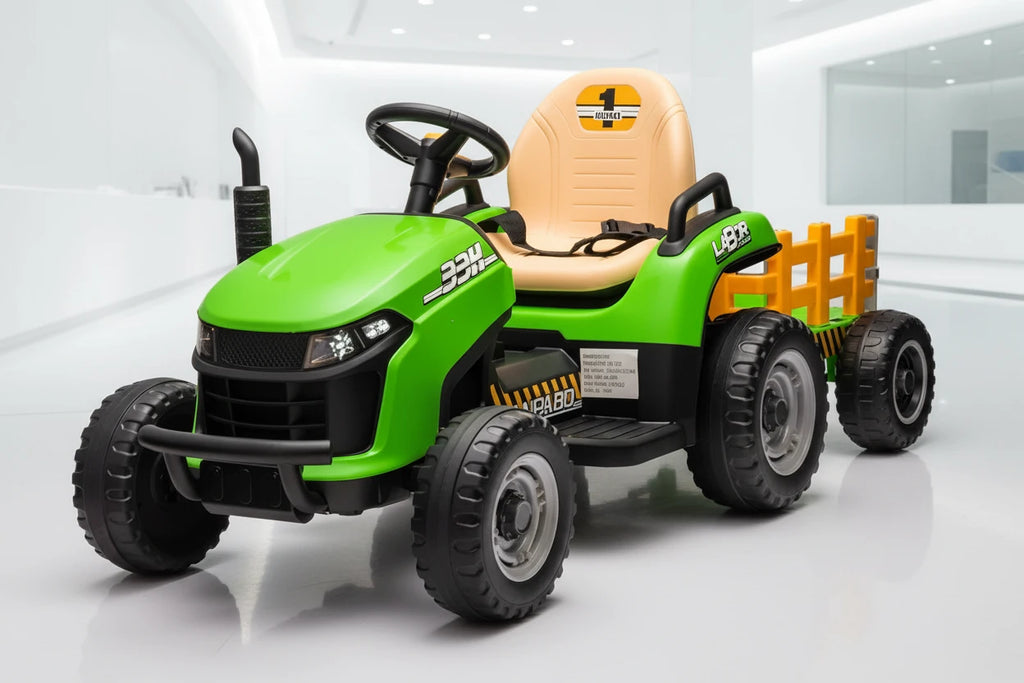
A childs motorised tractor is a battery-powered ride-on vehicle designed for children. It usually has a tractor-style body, large wheels, a driving seat, and simple controls.
Most models use rechargeable batteries to power one or more electric motors. The child controls the vehicle using a pedal, switch, steering wheel, or similar controls.
Some tractors are designed for younger children. Larger models can offer higher power and additional features for older children.
How Does a Motorised Tractor Work?
Most children’s electric tractors use a rechargeable battery system.
The battery supplies electricity to an electric motor. The motor turns the wheels through the vehicle’s drive system.
A typical tractor may include:
- Rechargeable battery
- Electric motor
- Accelerator pedal
- Steering wheel
- Forward and reverse controls
- Rechargeable charger
- Plastic or rubber wheels
- Safety seat
- Battery indicator on some models
The exact design varies between different ride-on tractors.
Common Features of Children’s Motorised Tractors
Different models offer different equipment and functions.
Battery Power
Battery capacity affects how long the tractor can operate between charges.
Higher-capacity batteries can generally provide longer running times, although actual performance depends on the motor, terrain, child weight, and driving conditions.
Electric Motors
Some tractors use one motor, while others use two motors.
Dual-motor designs can provide stronger movement and may perform better on suitable outdoor surfaces.
Forward and Reverse
Forward and reverse controls make the tractor easier to manoeuvre.
Parents should ensure children understand these controls before using the tractor independently.
Trailer Attachments
Some tractor designs include a small trailer.
Trailers can make outdoor play more interactive, allowing children to carry lightweight toys or garden items.
The trailer should never be used to carry another child unless specifically designed and approved for that purpose.
Choosing the Right Size
Size is an important consideration when buying a childs motorised tractor.
A child should be able to sit comfortably and reach the controls without stretching.
Parents should check the manufacturer’s recommended age, height, and weight limits.
A tractor that is too large may be difficult for a young child to control. A very small tractor may become uncomfortable as the child grows.
Where Can Children Use Motorised Tractors?
These vehicles are generally intended for private outdoor areas.
Suitable surfaces may include:
- Private gardens
- Lawns
- Driveways
- Smooth outdoor areas
- Suitable private paths
The surface should be relatively clear and free from hazards.
Steep slopes, busy roads, deep mud, loose gravel, and areas with traffic should generally be avoided.
Safety Tips for Parents
Safety should always be the first consideration when using a motorised ride-on tractor.
Adult Supervision
Young children should always be supervised while using a battery-powered ride-on vehicle.
An adult can help the child understand the controls and identify potential hazards.
Use Appropriate Speed
Some tractors have different speed settings.
Young or inexperienced children should start at the lowest suitable speed.
Children can gradually become familiar with steering, stopping, and reversing before using faster settings.
Wear Suitable Clothing
Children should wear comfortable clothing that does not become trapped around wheels or moving parts.
Closed footwear can also provide better protection than loose sandals.
Keep Away From Roads
A motorised tractor should not be treated like a road vehicle.
Children should use it only in safe private areas away from traffic.
Battery Charging and Maintenance
Proper battery care can help keep an electric tractor working reliably.
The battery should be charged using the supplied or manufacturer-approved charger.
Parents should follow the charging instructions carefully. The charging area should be dry, ventilated, and away from sources of heat.
The tractor should also be checked regularly.
Look for:
- Damaged cables
- Loose connections
- Worn tyres
- Cracked plastic
- Steering problems
- Damaged pedals
- Battery issues
- Unusual motor sounds
Any serious fault should be investigated before the tractor is used again.
How Long Does a Children’s Tractor Battery Last?
Running time varies between models.
Battery capacity, motor power, terrain, child weight, speed, and driving conditions can all affect performance.
Driving continuously on grass can require more power than travelling across a smooth surface.
For this reason, advertised running times should be treated as estimates rather than guaranteed figures.
What Age Is Suitable?
There is no single age that suits every motorised tractor.
Manufacturers provide age recommendations based on the vehicle’s design and controls.
Parents should consider the child’s ability to:
- Sit securely
- Understand basic instructions
- Operate simple controls
- Steer safely
- Stop when instructed
- Recognise basic hazards
Age guidance should always be considered alongside the manufacturer’s weight and size recommendations.
Childs Motorised Tractor Versus Traditional Ride-On Toys
Traditional ride-on toys are usually powered by the child’s own movement.
A motorised tractor uses an electric motor instead.
This allows the child to experience powered movement while practising steering and basic vehicle control.
Motorised tractors can also offer more realistic tractor features, making them popular for imaginative outdoor play.
What Should Parents Check Before Buying?
Before choosing a childs motorised tractor, check the specifications carefully.
Important points include:
- Recommended age range
- Maximum child weight
- Battery voltage and capacity
- Motor configuration
- Maximum speed
- Charging time
- Expected running time
- Wheel type
- Suitable terrain
- Safety features
- Availability of replacement parts
- Warranty information
These details provide a better idea of whether a tractor suits the intended child.
Keeping a Motorised Tractor Clean
Outdoor vehicles can collect dirt, grass, and dust during normal use.
After use, remove loose dirt from the wheels and body.
Avoid directing large amounts of water towards electrical components, charging ports, switches, or the battery area.
Store the tractor somewhere dry when it is not being used.
Regular cleaning can also make it easier to identify damage or worn components.
Final Thoughts
A childs motorised tractor combines outdoor play with simple electric vehicle controls. It can provide children with an engaging way to explore gardens and other suitable private spaces.
The best choice depends on the child’s age, size, experience, and intended environment.
Parents should always check manufacturer guidance and prioritise safe supervision. Battery care, regular inspections, suitable surfaces, and sensible speed settings can also support safer use.
A well-chosen motorised tractor can become an enjoyable part of outdoor play while helping children develop basic coordination and steering skills.