
How Master Key Systems Can Improve Access Management in Offices
Managing access to an office is about more than locking doors at the end of the day. Businesses need to control who can enter different rooms, protect confidential information, secure valuable equipment, and make sure employees can move around without unnecessary restrictions. When an office has several departments, storage areas, meeting rooms, and restricted spaces, keeping track of individual keys can quickly become difficult.
A master key system offers a practical way to organize office access. It allows authorized personnel to open multiple designated locks with one key, while employees can use individual keys that provide access only to the areas they need. When planned correctly, this arrangement can improve security, simplify daily operations, and reduce the administrative work involved in managing keys.
For businesses looking to improve their building security, understanding how master key systems work and how they fit into an existing access plan is an important first step.
What Is a Master Key System?
A master key system is a locking arrangement in which different keys operate specific locks according to a planned access hierarchy. Rather than giving every employee a key that opens every door, a business can assign access based on job responsibilities and security requirements.
For example, an employee may have a key that opens the main office entrance and their department’s workspace. A department manager may have additional access to a supply room and a meeting area. The facilities manager might hold a master key that opens several authorized areas throughout the building.
This setup creates different levels of access without requiring a completely separate locking arrangement for every employee.
For businesses considering this option, understanding master key systems can help clarify how individual keys, master keys, and lock cylinders work together. A locksmith can then assess the building layout and recommend a system that matches the company’s requirements.
1. Control Access to Different Office Areas
Not every employee needs access to every room in a workplace. Accounting departments may handle sensitive financial documents, human resources teams may maintain confidential employee records, and IT departments may store equipment that requires additional protection.
A master key system allows businesses to establish clear access levels for these areas.
Employees can receive keys for the rooms they use regularly, while managers and designated personnel can access additional spaces when necessary. This reduces the number of people who can enter restricted areas and makes it easier to maintain consistent security procedures.
For example, a small company might allow all staff members to enter the main office but restrict access to the records room and server room. A master key arrangement can support these distinctions while keeping the overall locking system manageable.
The key is to establish access permissions before installation. Businesses should identify which rooms require general access, which need limited entry, and who should be responsible for each restricted area.
2. Simplify Key Management for Employees and Managers
Managing dozens of keys can become an everyday inconvenience. Employees may carry several keys on their keyrings, while managers may need to keep track of separate keys for offices, storage rooms, and shared facilities.
A master key system reduces this complexity by organizing locks into a structured arrangement. Employees can carry only the keys they need, while authorized managers can use master keys to access multiple designated spaces.
This can be especially useful in offices with several departments or multiple floors. Instead of maintaining an unnecessarily large collection of keys for daily use, businesses can establish a simpler and more consistent approach.
Simplified key management also makes it easier to distribute keys to new employees, collect them when staff members leave, and maintain records of who has access to specific areas.
However, master keys should not be distributed casually. Because they can open multiple locks, they should be issued only to carefully selected personnel and stored securely when not in use.
3. Improve Security for Confidential Information
Office security involves protecting information as well as physical property. Contracts, financial records, customer files, employee information, and internal business documents may all require restricted access.
A master key system helps businesses create physical boundaries around sensitive materials. Instead of relying on employees to remember which doors should remain closed, companies can use different key permissions to limit entry to designated rooms.
For example, a business may provide general employees with access to common work areas while reserving the records room for human resources staff and selected managers. Similarly, an IT storage area can remain accessible only to authorized technical personnel.
These restrictions can reduce unnecessary access and support a broader workplace security policy.
Businesses should remember that physical locks are only one part of protecting confidential information. Visitor management, secure document storage, computer access controls, and employee security training remain important. Combining these measures with an organized key system creates a more complete approach to office security.
4. Make Staff Changes Easier to Manage
Employee turnover, promotions, department transfers, and changes in responsibilities can create complications when access permissions are not clearly organized.
When an employee leaves a company, management needs to recover issued keys and determine whether the former employee could still access sensitive areas. When someone changes departments, their access requirements may also change.
A well-designed master key system makes these responsibilities easier to manage because the business has a defined structure for assigning keys and controlling access.
Maintaining a key register is particularly useful. The register should identify each issued key, the employee responsible for it, the areas it opens, and the date it was issued or returned.
If a key goes missing, the company can use this information to assess the potential risk and determine the appropriate response.
It is worth noting that a lost master key can create a larger security concern than a lost key for a single room. Depending on the system and the circumstances, rekeying some or all affected locks may be necessary. Businesses should discuss these risks with a qualified locksmith when planning the system.
5. Support Daily Operations and Emergency Access
Office managers and facilities personnel often need access to rooms throughout the building to perform inspections, handle maintenance requests, or respond to unexpected problems.
Without a structured key arrangement, these tasks may require searching for individual keys or contacting several employees before a room can be opened.
A master key system can make authorized access more straightforward. Designated personnel may be able to open the relevant rooms with a single key, reducing delays during routine maintenance and other operational tasks.
Consider a situation in which a maintenance worker needs to inspect a leaking pipe in a locked utility room. If the designated facilities manager has the appropriate master key, access can be arranged without searching through multiple key cabinets.
Businesses should still establish clear procedures for emergency entry, particularly for areas containing sensitive records, expensive equipment, or hazardous materials. A master key should provide convenience without removing accountability.
6. Combine Mechanical Keys With Electronic Access Control
Traditional master key systems can work well in many offices, but some businesses need additional control over who enters the building and when.
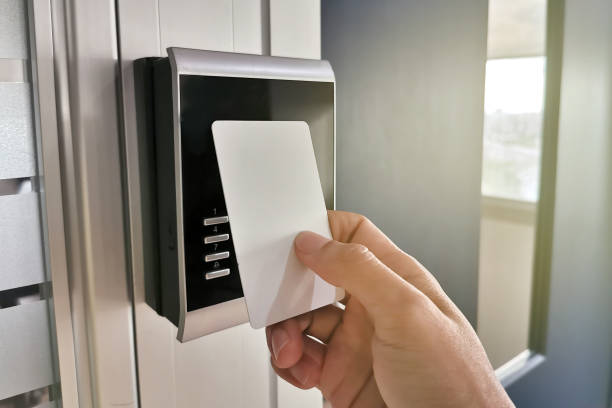
Electronic access control can complement or, in certain areas, replace conventional locks. Depending on the system, employees may use access cards, key fobs, PIN codes, or other credentials to enter designated spaces.
Electronic systems can offer features such as access schedules, entry records, and the ability to disable credentials without collecting a physical key. These capabilities can be useful for offices with changing staffing requirements or areas that need closer monitoring.
Businesses exploring this option can review access control system installation to understand how electronic security measures may fit into a wider access management plan.
A combined system can use mechanical master keys for selected doors and electronic controls for areas requiring more detailed access restrictions. For example, a small office might retain keyed locks for storage closets while using electronic credentials for its main entrance and server room.
The best arrangement depends on the building, the number of employees, security priorities, and the company’s budget. Not every office needs a fully electronic system, but planning for future requirements can help avoid unnecessary changes later.
7. Choose a System That Can Grow With the Business
An access management system should meet current needs without making future expansion unnecessarily difficult.
A company that begins with a few offices may eventually add departments, lease another floor, or introduce new restricted areas. If the original locking arrangement was not planned carefully, adding new locks and keys can become complicated.
A professional locksmith can evaluate the existing doors, lock types, building layout, and expected growth before recommending a master key structure.
The plan should account for the number of locks, the access levels required, the number of master keys, and any areas that must remain separate from the rest of the system.
It is also important to consider the security of the key system itself. Key duplication policies, restricted keyways where appropriate, secure key storage, and regular reviews of access permissions can all help maintain control.
Businesses should avoid making the hierarchy unnecessarily complicated. A system with too many access levels may be difficult to administer and increase the likelihood of mistakes. A straightforward structure is usually easier for employees and managers to follow.
8. Work With a Professional Locksmith
Designing a master key system requires more than choosing a lock and cutting additional keys. The locksmith must understand how the building is used, which areas need protection, and how different access permissions should work together.
Professional planning can help identify potential weaknesses, reduce unnecessary access, and ensure that the selected locks are suitable for the intended arrangement.
Businesses in South Florida can explore commercial locksmith services in Bay Harbor Islands when evaluating options for improving office security and managing building access.
Before arranging installation, prepare a list of the doors that need to be included, the employees or roles requiring access, and any rooms that require special restrictions. It is also helpful to explain whether the office already has compatible locks or needs new hardware.
After installation, management should maintain an accurate key register, establish rules for issuing and returning keys, and review permissions whenever staffing or office arrangements change.
Regular inspections can also help identify worn locks, damaged keys, or doors that no longer close and latch properly. Addressing these issues early can prevent access problems and help keep the system working as intended.
Best Practices for Maintaining a Master Key System
Once the system is installed, consistent management is essential. Even a well-designed locking arrangement can become less effective if keys are shared carelessly or access permissions are never reviewed.
Businesses can maintain better control by following a few practical measures:
- Assign keys according to job responsibilities. Give employees access only to the areas required for their work.
- Keep an updated key register. Record who receives each key and when it is returned.
- Secure master keys. Limit possession to designated personnel and avoid leaving master keys unattended.
- Establish a lost-key procedure. Employees should report missing keys promptly so management can assess the risk.
- Review access after staff changes. Collect keys from departing employees and update permissions when responsibilities change.
- Schedule lock inspections. Check for worn hardware, damaged keys, and doors that do not operate correctly.
- Plan for future changes. Reassess the system when the office expands or new restricted areas are introduced.
These practices help businesses preserve the benefits of a master key system while keeping responsibility for access clear.
Conclusion
A master key system can make office access management easier by organizing keys, establishing access levels, protecting restricted areas, and reducing the daily effort involved in managing multiple locks. It can also help managers respond to maintenance needs and handle employee changes more systematically.
The most effective system is one designed around the way a business actually operates. Office managers should identify security priorities, determine who needs access to each area, and establish clear procedures for issuing and tracking keys. Where additional monitoring or flexible permissions are necessary, electronic access control may provide a useful complement.
With careful planning, professional installation, and regular reviews, businesses can build an access management arrangement that supports both workplace security and everyday productivity.