
White Crowns for Children: Benefits, Types & When Are They Needed?
Children’s teeth play an important role in chewing, speaking and maintaining space for permanent teeth. However, tooth decay, dental injuries and weakened enamel can sometimes affect a child’s ability to maintain a healthy smile. When a tooth becomes significantly damaged, a dental filling may not provide enough protection. In such situations, a dental crown may be recommended by a paediatric dentist.
White Crowns for Children are one treatment option designed to restore damaged teeth while offering a more natural-looking appearance. These crowns can help protect weakened teeth, restore their shape and support normal function. Understanding the available options, benefits and treatment process can help parents make informed decisions about their child’s dental health.
What Are White Crowns for Children?
White dental crowns are tooth-shaped restorations placed over damaged or weakened teeth. They cover the visible portion of a tooth, helping restore its structure, appearance and function.
Unlike traditional metal crowns, white crowns are designed to blend more closely with the natural colour of teeth. They may be made from materials such as zirconia or other tooth-coloured restorative materials, depending on the clinical requirements.
The choice of Tooth Coloured Crowns Children may receive depends on several factors, including the child’s age, the position of the affected tooth, the extent of damage and their overall dental health.
When Might a Child Need a Dental Crown?
A paediatric dentist may recommend a crown when a child’s tooth needs more protection than a regular filling can provide. Some common situations include:
- Extensive tooth decay: When decay affects a large portion of a tooth, a crown may help protect the remaining structure.
- Broken or damaged teeth: Dental injuries can weaken or fracture teeth, making additional protection necessary.
- After pulp treatment: Certain teeth that have undergone pulp therapy may need a crown to restore and protect them.
- Weak tooth structure: Developmental conditions affecting enamel may leave teeth more vulnerable to damage.
- Large existing fillings: A tooth with significant previous restoration may benefit from full coverage.
Not every damaged tooth requires a crown. A specialist assessment helps determine the most appropriate treatment for the child’s needs.
Benefits of White Dental Crowns for Kids
Parents often consider appearance when exploring restorative dental treatments for their children. However, the purpose of a crown goes beyond aesthetics.
Here are some potential benefits:
1. Natural-looking appearance
One of the main advantages of white crowns is their tooth-coloured finish. They can blend more naturally with surrounding teeth, making them an option for parents concerned about visible metal restorations.
2. Protection for weakened teeth
A crown covers the affected tooth and helps protect its remaining structure from further damage. This can be particularly important when extensive decay or previous treatment has weakened the tooth.
3. Restored chewing function
A damaged tooth may make chewing uncomfortable or difficult. A suitable crown can help restore the tooth’s shape and support normal biting and chewing.
4. Full coverage
Unlike a small filling that repairs a specific area, a crown covers the visible portion of the tooth. This provides broader protection when a tooth has extensive structural damage.
5. Supporting oral health
Restoring a damaged baby tooth can help maintain its function until it naturally falls out. Baby teeth also help guide permanent teeth into their correct positions.
Types of Kids’ Dental Crowns
Different crown materials are available for children, and each has its own characteristics. The most suitable option depends on the tooth being treated and the child’s clinical needs.
White Crowns
These restorations are designed to provide a natural-looking finish. Zirconia is one commonly used material for white paediatric crowns. It is valued for its strength and tooth-like appearance. However, suitability depends on factors such as tooth position, remaining structure and the available space.
Stainless Steel Crowns
Stainless Steel Crowns have traditionally been used to restore primary molars affected by extensive decay or structural damage. They are durable and provide full coverage, making them a practical option for certain back teeth.
Metal Crowns for Children
Some parents search for Metal Crowns Children may need when exploring treatment options for damaged baby teeth. Metal crowns are generally silver-coloured and are often selected for their durability and protective coverage, particularly on back teeth.
The decision between white and metal restorations should be based on clinical suitability rather than appearance alone.
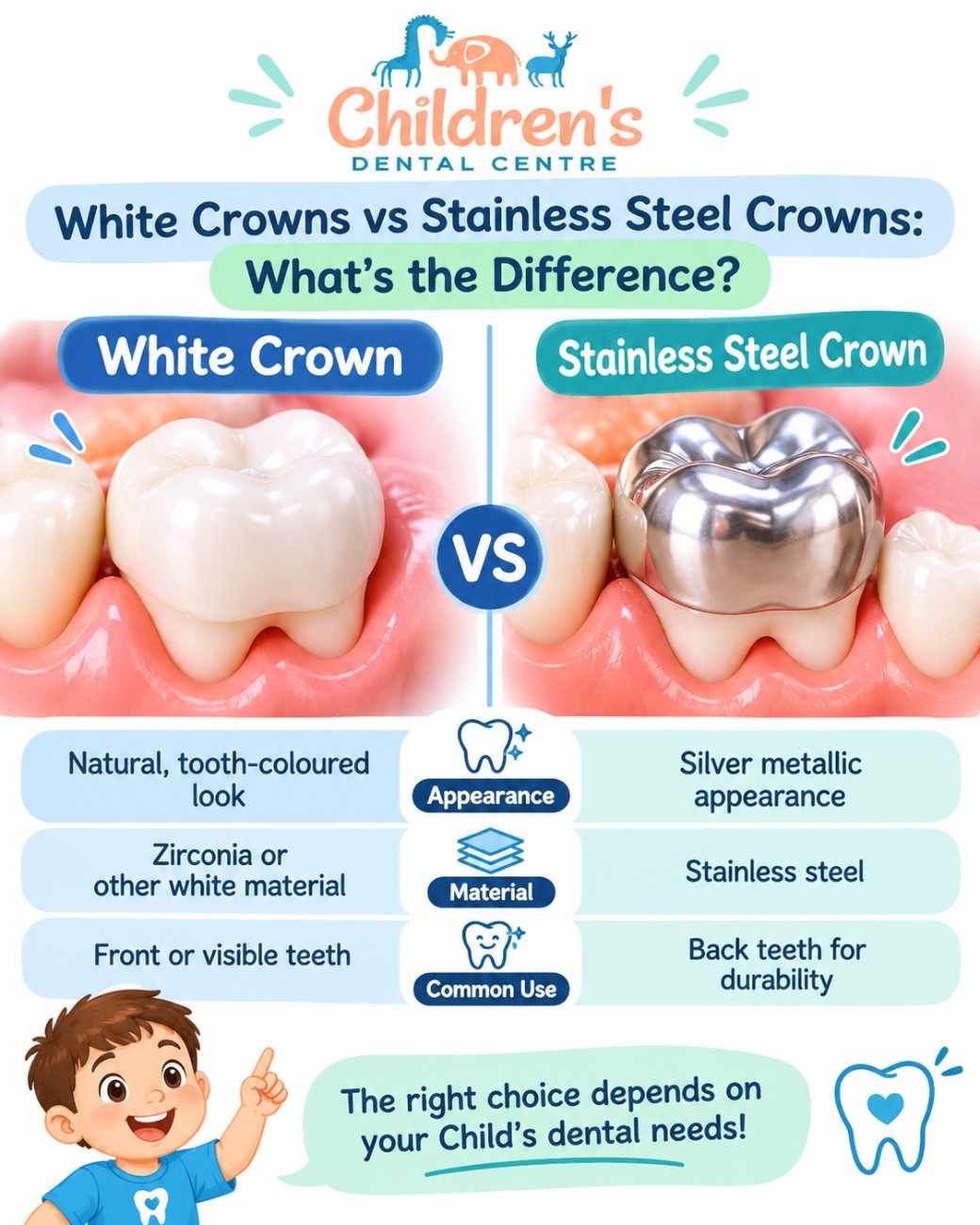
White Crowns vs Stainless Steel Crowns: What’s the Difference?
Both options can help restore damaged children’s teeth, but they differ in appearance, materials and clinical considerations.
White crowns are designed to resemble natural teeth, making them an option for families who prefer a tooth-coloured restoration. Stainless steel crowns have a metallic appearance but are known for their durability and use in restoring primary molars.
The condition of the tooth, its location, the child’s age, biting forces and treatment requirements all influence the recommendation.
A paediatric dentist can explain the advantages and limitations of each option before deciding which restoration is appropriate.
What Happens During Dental Crown Treatment for Children?
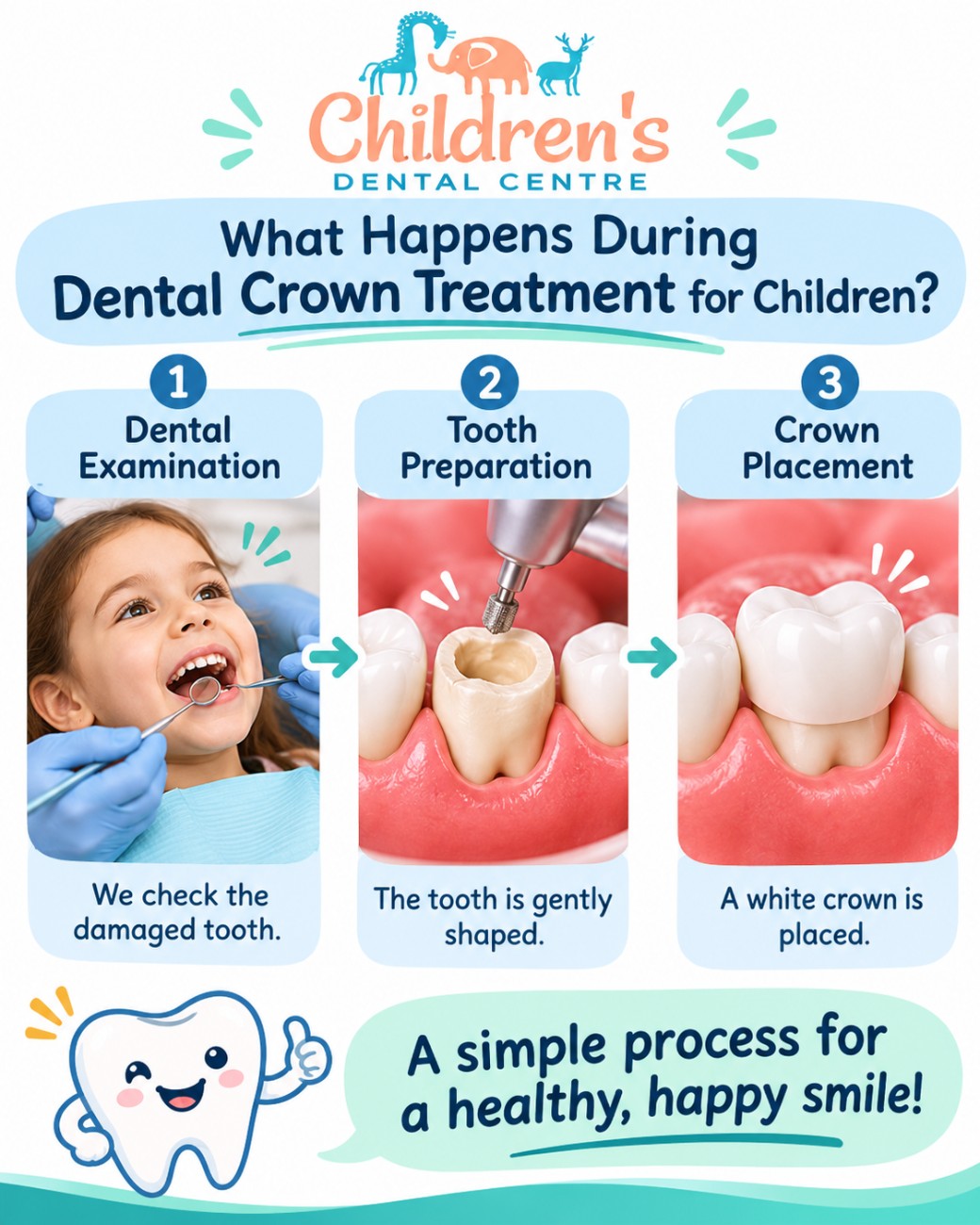
The treatment process depends on the type of crown and the child’s individual needs. Generally, it involves several steps:
1. Initial examination: The dentist examines the affected tooth and may recommend dental X-rays to assess the extent of damage.
2. Treatment planning: The dentist discusses the available options and determines whether a crown is appropriate.
3. Tooth preparation: Depending on the crown type, the affected tooth is carefully prepared to accommodate the restoration.
4. Crown placement: The selected crown is positioned and secured according to the treatment technique.
5. Final checks: The dentist checks the crown’s fit and bite to ensure it is comfortable and functions properly.
Some children may need additional support to feel comfortable during treatment. The dental team can discuss suitable approaches based on the child’s age, needs and level of anxiety.
How to Care for Your Child’s Dental Crowns
Good oral hygiene remains important after crown placement. Parents can support their child’s dental health by following these simple habits:
- Brush twice daily using an age-appropriate fluoride toothpaste.
- Help younger children brush effectively.
- Clean between teeth regularly as recommended by the dentist.
- Limit frequent sugary snacks and drinks.
- Attend routine dental check-ups.
- Contact the dental team if the crown becomes loose, damaged or uncomfortable.
Although a crown protects the restored tooth, it does not prevent decay from developing in other teeth. Regular preventive care is still essential.
Frequently Asked Questions
1. Are white crowns safe for children’s baby teeth?
White crowns can be suitable for certain primary teeth when clinically indicated. A paediatric dentist will assess the tooth’s condition, position and remaining structure before recommending treatment.
2. Are white crowns better than stainless steel crowns?
Neither option is automatically better for every child. White crowns offer a more natural appearance, while stainless steel crowns provide durable coverage for many primary molars. The right choice depends on individual dental needs.
3. Do white dental crowns hurt children?
The procedure is performed using appropriate pain-management techniques. Local anaesthesia may be used to keep the child comfortable during treatment. The dental team will explain what to expect before starting.
4. How long do children’s dental crowns last?
A crown may remain in place until the baby tooth naturally falls out, depending on the child’s age, tooth condition, crown material and oral hygiene. Regular dental reviews help monitor its condition.
5. Can children eat normally after getting a dental crown?
Most children can gradually return to their usual eating habits once their dentist confirms it is appropriate. Following any specific aftercare instructions and maintaining a balanced diet can help support oral health.
Give Your Child’s Smile the Care It Deserves
Choosing the right dental restoration can make an important difference to a child’s comfort, confidence and oral health. Whether a child needs a white crown or another restorative option, an individual assessment helps ensure the treatment is appropriate for their developing teeth.
At Children’s Dental Centre, our team focuses on providing specialist paediatric dental care in a friendly and supportive environment. Located in Aspley, Brisbane, we aim to make dental visits as positive and comfortable as possible for children and their families.
If you are concerned about your child’s damaged or decayed tooth, contact our friendly team to discuss the available treatment options.
Book an appointment with Children’s Dental Centre today.
Phone: +61 7 5406 9999
Address: Suite 2B, 605 Robinson Rd W, Aspley, QLD 4034